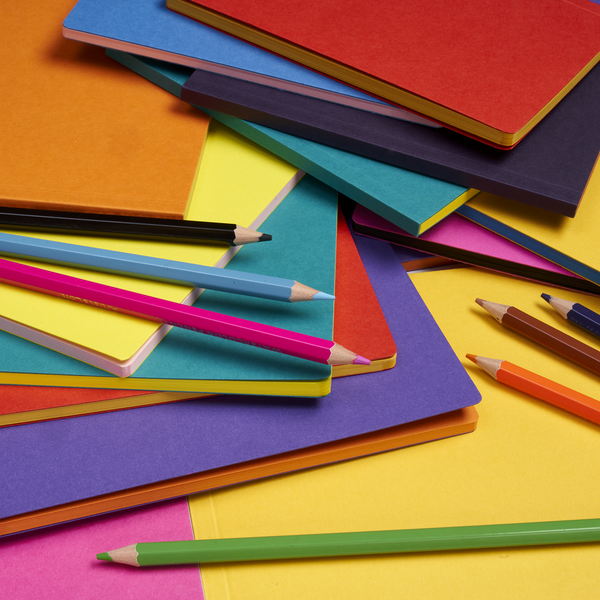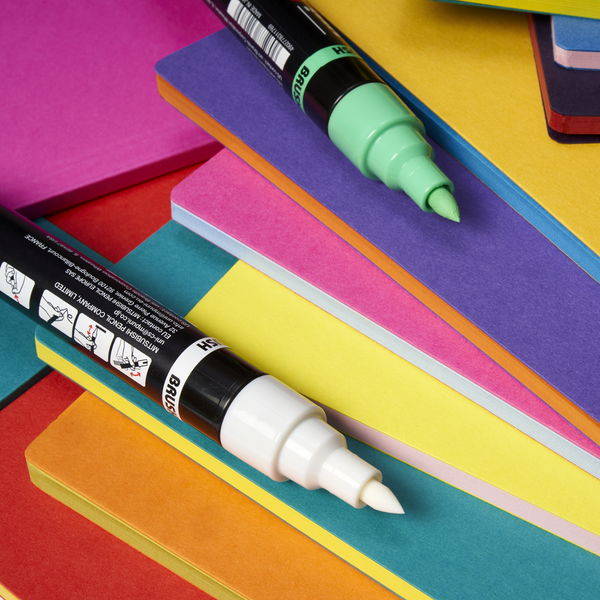


Colored paper is paper that's been pigmented or dyed all the way through — not just printed on one side. Every cut edge shows color. Every mark sits on a ground that's already doing something. Artists use it because starting with color changes how you draw: the page stops being blank, value studies go faster, and you make color decisions from the first mark instead of the last. That's the short version. Here's the longer version — what colored paper actually is, the formats it comes in, how to pick a weight and a palette, and where each major brand fits.

What colored paper actually is
Real colored art paper is dyed at the pulp stage. The pigment gets mixed into the paper before it's pressed and dried, so the color goes all the way through. If you cut it, erase it, or scuff it, there's no white core underneath. That's the difference between archival colored paper and construction paper, which will fade on you or show white the moment you work the surface.
Most colored papers fall into three families: brights, pastels, and earth tones. Each one exists for a different reason. Brights are for high-contrast work — ink, marker, gel pen, gouache. Pastels soften things and flatter portrait and botanical work. Earth tones do what artists have been using tan and ochre grounds for since the Renaissance: give you a natural midtone so you can stop rendering it and start drawing.
The three formats
Colored paper comes in three main formats, and the right one depends on how you actually work. Not theoretically. Actually.
Bound sketchbooks
A bound sketchbook keeps everything together. Good for journaling, travel sketching, and anything sequential. The tradeoff is you can't pull out a single drawing to frame it. Pocket-sized colored sketchbooks barely exist — the category has been white or cream for 20 years. Our Uglybooks No. 1 and No. 2 are both colored-paper pocket sketchbooks: 48 pages of 135gsm paper per book, staple-bound, two sizes.
Pads
Pads are the workhorse. Bound on one edge, work one sheet at a time, tear out what you want to keep. Standard size is 9 x 12 inches. Canson Mi-Teintes, Fabriano Tiziano, Strathmore 400, and our Uglypads all ship in this format. The meaningful differences are color palette and sheet count, not the format itself.

Loose sheets
Loose sheets are for large-format work, framing-ready drawings, printmaking, collage, and classroom supply. They come in packs at sizes from 19 x 25 up to 22 x 30 inches. If you're working bigger than pad size, loose sheets are your only option. Our Uglysheets come in 9 x 12 and 19 x 25 at 175gsm.
Paper weight and what it actually matters for
Paper weight is measured in grams per square meter (gsm) or pounds (lb). Heavier paper handles more media, resists warping under pressure or layered colored pencil, and feels more substantial. Lighter paper is cheaper, gives you more sheets, and is fine for practice or quick sketches. Here's what each range actually does:
-
70–90gsm. Notebook and notepad weight. Fine for writing, rough sketches, pencil. Too light for layered dry media. This is where most pocket notebooks live — and one of the main reasons most pocket notebooks aren't great for drawing.
-
120–140gsm. Standard sketchbook weight. Handles pencil, colored pencil, fineliner, ballpoint, gel pen, light marker. Our Uglybooks sketchbooks are 135gsm.
-
150–175gsm. Drawing paper weight. Built for colored pencil layering, marker, chalk, gouache, and mixed dry media. Our Uglypads and Uglysheets are 175gsm. Canson Mi-Teintes and Fabriano Tiziano are both 160gsm.
-
200–300gsm+. Watercolor weight. Overkill for dry media on colored paper.
How to pick a palette
The palette question is really about what you're drawing and what media you're using. An electric magenta is perfect for an ink sketch and useless for a subtle colored-pencil portrait. A warm tan is perfect for a landscape study and wrong for a graphic illustration. Start with the subject, then pick the palette.
Brights — for graphic, bold, high-contrast work
Saturated colors like electric orange, magenta, lime, cobalt, cadmium yellow. Built for ink, marker, gel pen, gouache, and white pencil over black. They reward confident mark-making and punish subtle tonal work. Our Uglypads Brights Vol. 1 and Vol. 2 are the clearest option in this category — almost nobody else in the mainstream makes a dedicated brights pad, because the pastel-artist customer base they've been serving for 100 years doesn't want brights.
Pastels — for soft, gentle, tonal work
Pale pinks, mints, lavenders, butter yellows. Built for portrait studies, botanical illustration, stationery, delicate colored pencil. A warning on the word: "pastel paper" means two different things. Most pads labeled "pastel" are built for pastel artists (chalk pastels) and include muted grays and champagnes. Our Uglypads Pastels is the other meaning — actual pastel colors.
Earth tones — for natural subjects and value studies
Warm beiges, clay browns, ochres, sage greens, slate grays. The traditional artist palette — the colors of actual ground, rock, and bark. They give you a natural midtone that makes highlights and shadows more deliberate. Perfect for landscape, plein air, still life, and classical drawing practice. If you've never worked on colored paper before, start here. The earth tones are the most forgiving introduction to the idea.
Where the major brands fit
Four brands own most of the colored paper market. Each one has a strength and a blind spot.
|
Brand |
Strength |
Blind spot |
|---|---|---|
|
Canson Mi-Teintes |
450-year heritage. The iconic pastel paper. Available in nearly every art store. |
Palettes built for pastel artists. The "Assorted" pad includes white, champagne, moonstone, and steel gray. No dedicated brights. |
|
Fabriano Tiziano |
Italian archival quality. Highly lightfast. Beautiful texture. |
Still pastel-centric palette logic. Harder to find in US stores than Canson. |
|
Strathmore 400 Series |
Affordable. Widely distributed. Consistent quality. |
Limited color range. The Toned Sketch line only comes in tan, gray, and blue. |
|
Uglybooks |
Most vivid palettes in the category. Curated collections across all three formats. Made in the USA. |
Newer brand. Smaller physical retail footprint. Not trying to serve the pastel-artist market. |
A quick media compatibility guide
Not every medium works on every paper. Here's a reference for dry and mixed dry media on 135–175gsm colored paper — which covers our whole line.
-
Graphite and charcoal. Excellent. Works on any colored paper weight above 90gsm.
-
Colored pencil. Excellent. Heavier paper holds up to layering and burnishing.
-
Ink pen (fineliner, ballpoint, gel). Excellent. Gel pens especially shine on colored paper — opaque whites and metallics pop.
-
Markers. Good on heavier weights. Always test bleed-through before committing to a two-page spread.
-
Gouache. Good. Opaque paints cover colored paper beautifully.
-
Soft pastels and oil pastels. Depends on texture. Our sketchbooks and pads are smoother than dedicated pastel paper — use them with harder pastel pencils or Conte if you want to go that direction.
Frequently asked questions
What is the best colored paper for artists?
It depends on format and palette. For bound pocket sketchbooks with colored pages, our Uglybooks No. 1 and No. 2 are pretty much the only dedicated option in the category. For 9x12 pads, Uglypads offer the most vivid palette variety across four collections. For loose sheets, Canson Mi-Teintes, Fabriano Tiziano, and our Uglysheets are the three main choices, each with different strengths.
What's the difference between colored paper and toned paper?
The terms overlap heavily. "Toned paper" usually means specifically midtone grays, tans, and browns for value studies. "Colored paper" is broader and includes brights, pastels, and earth tones. A tan Uglybooks sketchbook is a toned paper. A magenta Uglypads Brights sheet is a colored paper.
What weight should colored paper be?
For drawing and mixed dry media, 135–175gsm is the sweet spot. Our sketchbooks are 135gsm. Our pads and sheets are 175gsm. Canson Mi-Teintes and Fabriano Tiziano are 160gsm. Anything under 120gsm is too light for layered colored pencil or marker work.
Is colored paper archival?
Good colored paper is acid-free and lightfast, so the color doesn't shift over time and the paper doesn't yellow. Canson, Fabriano, and Uglybooks products are all acid-free. Construction paper is not archival — it'll fade within months of light exposure.
What colors should I start with if I'm new to colored paper?
Start with a neutral midtone — kraft brown, warm gray, or a muted blue. These are forgiving, flatter most subjects, and let you learn to work with a colored ground without the shock of a saturated background. Once you're comfortable, branch into brights or pastels based on what you actually draw.