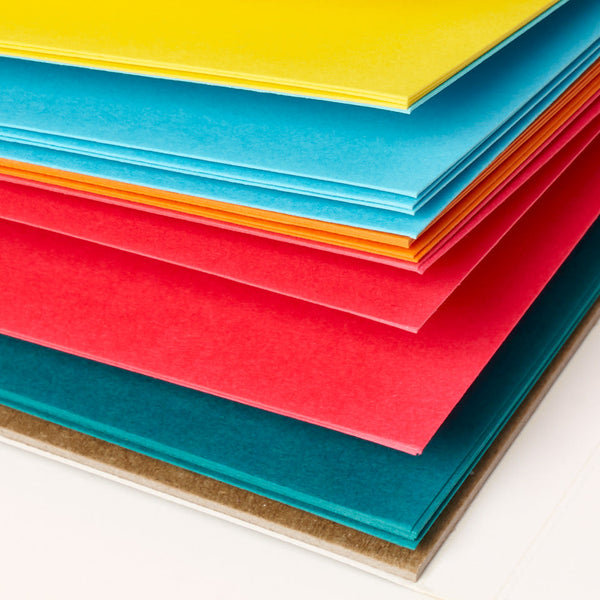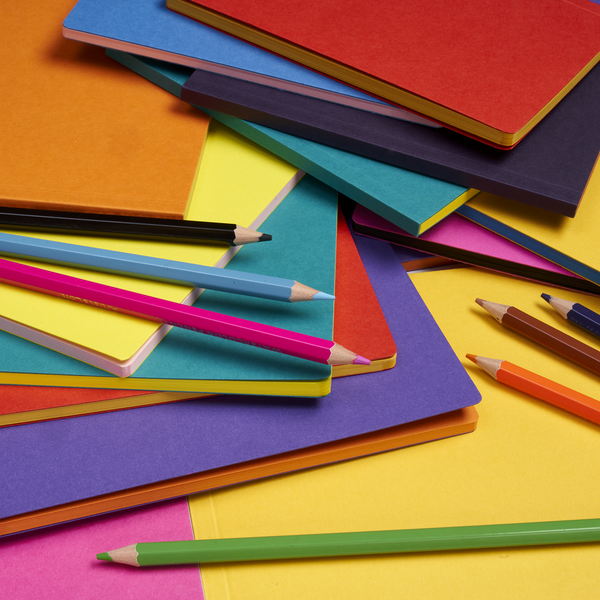


Paper weight is the most confusing spec on the label and the one that matters most. Too light and your marker bleeds through. Too heavy and you're paying for paper you don't need. Here's what gsm actually measures, what each weight range is actually good for, and how the major drawing papers stack up — with nothing hidden.
What gsm actually measures
GSM stands for grams per square meter. It's the weight of a single sheet, measured as if that sheet were exactly one square meter. Higher number, heavier — and usually thicker — paper.
The other common measurement is pounds (lb), which is the weight of 500 sheets of that paper at its standard production size. The trap: that standard size is different for different paper types, so "80lb cover stock" and "80lb drawing paper" can be totally different weights. Always trust gsm over lb when you're comparing papers.
Rough conversions (drawing paper)
-
60lb ≈ 90gsm
-
80lb ≈ 130gsm
-
90lb ≈ 160gsm
-
100lb ≈ 176gsm
-
140lb ≈ 300gsm
What each weight range is actually good for
70–90gsm — Notepad weight
This is the weight of a legal pad, a cheap notebook, or a Field Notes-style memo book. Fine for pencil, pen, and light sketching. Too light for heavy colored pencil layering, wet or heavy markers, or anything you want to push. Most pocket notebooks sit here, which is the main reason most pocket notebooks aren't great for drawing.
120–140gsm — Sketchbook weight
The sweet spot for a general-use sketchbook. Handles pencil, colored pencil, fineliner, ballpoint, gel pen, and most light marker work. Heavy enough that you can sketch on both sides of the page without seeing too much through. Our Uglybooks sketchbooks are 135gsm — meaningfully heavier than standard Moleskine (around 70–90gsm in most of their lines) or Field Notes (around 50–70gsm).
150–175gsm — Drawing and pastel paper weight
This is professional drawing paper territory. 160gsm is Canson Mi-Teintes and Fabriano Tiziano — the two most iconic colored papers in the market. 175gsm is Uglypads and Uglysheets — a touch heavier, which helps with heavy colored pencil layering and gouache. Handles everything a 135gsm sketchbook does, plus heavier burnishing, more layering, and more aggressive erasing.
200–300gsm — Heavyweight and watercolor
Most drawing work doesn't need this. It's overkill for dry media. This is for watercolor, heavy mixed media, and situations where the paper has to hold up to soaking. For pure dry-media drawing, 175gsm is as heavy as you'll ever need to go.
A side-by-side
|
Paper |
Weight |
Best for |
|---|---|---|
|
Moleskine Sketchbook |
~165gsm |
Ivory drawing on smooth stock. No colored paper option. |
|
Field Notes (standard) |
~70gsm |
Notes, ballpoint, pencil. Not a drawing paper. |
|
Uglybooks Sketchbooks |
135gsm |
Colored pocket sketching. Dry media and gouache. |
|
Canson Mi-Teintes |
160gsm |
Pastel, colored pencil, mixed dry media. |
|
Fabriano Tiziano |
160gsm |
Same as above, Italian heritage paper. |
|
Uglypads |
175gsm |
Vivid colored paper pads for colored pencil, marker, gouache. |
|
Uglysheets |
175gsm |
Loose sheets for large-format work, framing, classroom. |
|
Strathmore 400 Series Drawing |
80lb / 130gsm |
General-purpose drawing. |
The honest tradeoff
Heavier paper isn't always better. It costs more per sheet, takes up more space, and gives you fewer pages per pad or sketchbook. A 175gsm pad of 25 sheets is the same physical thickness as a 135gsm pad of 32 sheets — you're trading sheet count for weight.
The right weight is whatever your media actually needs. Sketching in pencil and ballpoint on the subway? 135gsm is plenty. Doing serious colored pencil or gouache in the studio? 175gsm gives you the room to push.
A rule of thumb
If you're thinking about the paper while you work, it's the wrong paper. Good paper disappears into the drawing.
Pick the lightest weight that handles your media without complaint. Don't overthink it.
Frequently asked questions
What does GSM mean in paper?
GSM stands for grams per square meter. It measures the weight of a sheet of paper, making it one of the easiest ways to compare different drawing papers regardless of brand.
Is higher GSM always better for drawing?
No. The best paper weight depends on your drawing materials. Lighter papers are great for sketching and everyday drawing, while heavier papers are better for techniques that involve heavy layering, gouache, or repeated erasing.
What is the best paper weight for sketching?
For most artists, 120–140gsm is an excellent range for sketching. It handles graphite, colored pencils, fineliners, and gel pens while remaining lightweight enough for everyday use. Uglybooks sketchbooks use 135gsm paper, making them a versatile choice for portable sketching. Uglypads come in an even heavier 175gsm and Uglysheets come in both 350gsm and 350gsm.
What is the best paper weight for colored pencils?
Colored pencils generally perform best on papers between 160gsm and 175gsm. These heavier papers hold multiple layers well and are less likely to buckle or wear down during burnishing. Uglypads and Uglysheets are made with 175gsm paper for this reason.
Is 175gsm paper suitable for mixed media?
Yes. While it's not intended for heavy watercolor washes, 175gsm paper is an excellent choice for dry media, gouache, paint markers, ink, and layered colored pencil work,Uglysheet 350gsm is even better for wet media..
What's the difference between Uglybooks, Uglypads, and Uglysheets?
Uglybooks feature 135gsm colored paper in a portable sketchbook format that's ideal for everyday drawing. Uglypads use 175gsm paper in pad form for finished artwork and studio practice, while Uglysheets offer 175gsm and 350gsm as individual loose sheets for framing, collage, and large-format projects.
Should beginners worry about paper weight?
Not too much. It's more important to choose a paper that suits your favorite drawing materials than to chase the highest GSM. As your skills and techniques develop, you'll naturally discover which paper weights work best for your style.