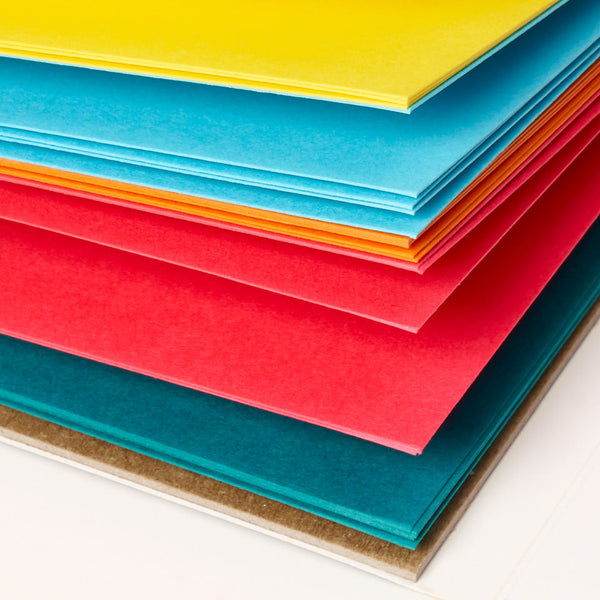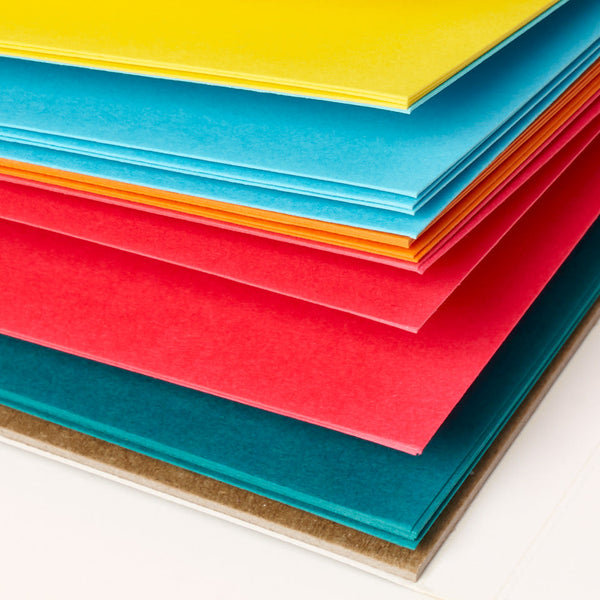


Loose sheets aren't just big pads without the binding. They're the right format for a specific kind of work — large-scale drawing, framing-ready pieces, collage and mixed media, printmaking, classroom supply — and the wrong format for almost anything you'd do in a sketchbook. Here's when loose sheets beat a pad and how to actually use them.
When loose sheets are the right call
You're working larger than 12 inches on a side
Most pads top out at 9 x 12. Some go to 12 x 16. Past that, loose sheets are your only option. Our Uglysheets come in 19 x 25 specifically because that's the size that actually matters for large-format dry media work — big enough for scale, small enough to frame and ship.
You're going to frame or sell the work
A sheet torn out of a pad has a perforated or glue-bound edge. It's fine for sketching but not great for framing — the edge reads as "ripped from a pad." Loose sheets have clean edges all four sides. They look finished before you've even drawn on them.
You're mounting or collaging
Pads are the wrong source for collage paper — you're limited to one pad's worth of colors, and tearing sheets out one at a time is tedious. Loose sheets let you fan out every color you have and cut across them. It's the difference between cooking from a grocery bag and cooking from a stocked kitchen.
You're supplying a classroom or a workshop
A pad per student is expensive and wasteful. Loose sheets distributed by the handful — one color each for a specific exercise, or a mixed stack to pick from — are how working art programs actually supply classes. Uglysheets 9 x 12 are the right size for most K–12 and beginner adult classroom use.
You're working with printmaking or mixed media
Anything that involves the paper passing through a press, getting mounted on a substrate, or getting cut to size needs to start as a loose sheet. Pads are bound specifically to prevent that flexibility.
When a pad is the right call instead
Loose sheets aren't always better. Skip them when:
-
You want to sketch sequentially in one place and keep the drawings together.
-
You need a portable surface — pads travel better than unbound sheets.
-
You're working under 12 inches and don't need to frame.
-
You're practicing and want the pad's "sketch it and move on" workflow.
The two Uglysheets sizes and what they're for
| Size | Best for |
|---|---|
| 9 x 12" | Classroom supply. Workshop exercises. Standard-size framing. Collage source material. When you want the pad format without the binding. |
| 19 x 25" | Large-format drawing. Framing-ready finished work. Printmaking. Studio projects that outgrow pads. Mounting and display. |
How to store loose sheets without destroying them
This is the part nobody talks about. Loose sheets are fragile until you commit them to a drawing. Corners bend. Surfaces scuff. Edges tear. Here's what actually works.
-
Flat storage is non-negotiable. A portfolio, a flat file drawer, or a large drawing board. Never rolled (roll memory is permanent), never folded, never leaned against a wall.
-
Interleave with glassine or tissue. If you're stacking different colors, a thin sheet of glassine between each prevents color transfer from media already applied. For untouched paper it's not critical, but once you've drawn on a sheet, interleave.
-
Keep them dark and dry. Colored paper is lightfast, but lightfast means resistant, not immune. Sustained direct sunlight over years will shift color. A cabinet drawer or portfolio solves this.
-
Label by color on the outside. If you buy multiple colors, write the color on the edge of the stack (or on a tab on the portfolio). Digging through a stack looking for "the green one" scuffs surfaces.
Project ideas by size
9 x 12 projects
-
Classroom still-life studies — one sheet per student, rotated colors.
-
Color theory exercises — same subject on four different grounds.
-
Quick framed pieces for hallways, gift shops, hand-made cards.
-
Collage source material, cut and combined.
19 x 25 projects
-
Figure drawing from life — full-body studies at scale.
-
Large-format illustration for commercial work.
-
Printmaking — relief, screen, and monotype all work on 175gsm.
-
Framed finished work for group shows or solo exhibitions.
-
Mixed media collage at scale.
The bigger point
Loose sheets force a different posture than a pad. A pad says: sketch it, move on, accumulate. Loose sheets say: this one matters, treat it like a real surface. Both are valid, but they produce different work. If your studio practice has been exclusively sketchbook and pad, adding loose sheets — even just as an experiment — tends to shift what you make in useful ways.
Frequently asked questions
What are loose colored paper sheets?
Loose colored paper sheets are individual sheets that aren't bound into a pad. They offer more flexibility for finished artwork, large-format drawings, collage, printmaking, and mixed media projects.
When should I use loose sheets instead of a paper pad?
Choose loose sheets when you're creating artwork to frame, working on large pieces, cutting paper for collage, or sharing paper in a classroom or workshop. A paper pad is usually better for sketching, practice, and keeping drawings together.
Are loose sheets better for framing?
Yes. Loose sheets have clean edges on all sides, making them easier to mat and frame. Unlike pages removed from a pad, they don't have glued or perforated edges that may need trimming.
What drawing materials work best on Uglysheets?
Uglysheets works well with graphite, charcoal, colored pencils, pastel pencils, ink, gouache, and many mixed media techniques. The best medium depends on the paper's weight and surface.
How do I store loose colored paper?
Store loose sheets flat inside a portfolio, flat file, or large drawing folder. Keeping the paper flat helps prevent bent corners, creases, and surface damage before you begin drawing.
Why choose Uglysheets for loose colored paper?
Uglysheets are a practical choice when you want the flexibility of individual colored sheets instead of a bound pad. Whether you're creating finished artwork, preparing pieces for framing, building a collage, or teaching a class, loose sheets let you work without the limitations of a sketchbook. Uglysheets are also slightly heavier than competitors offerings and have a very versatile subtle vellum texture.
Can I cut Uglysheets into smaller sizes?
Yes. One advantage of working with loose sheets is that they can be trimmed to fit your project. Many artists cut larger sheets into smaller formats for studies, handmade cards, collage elements, or custom frame sizes.